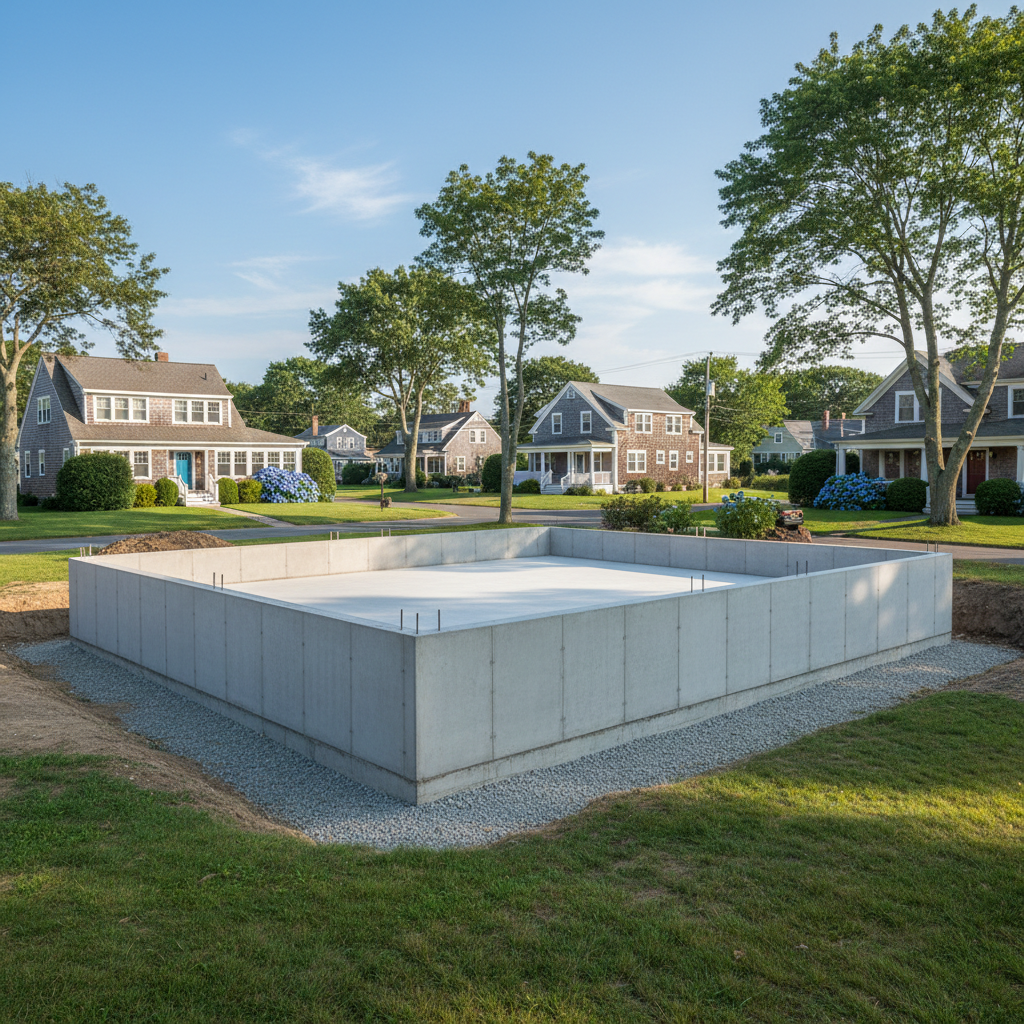
Salt air, coastal moisture, and heavy winter nor'easters take a real toll on buildings around Bristol. If you live down near Hope Street or own an older colonial up toward the Common, you already know that our local environment is very harsh. Foundations take the brunt of it all.
Most people do not spend much time thinking about what is happening beneath their floorboards until water starts seeping in during a heavy spring thaw. But ground conditions right here in Bristol are tricky. We deal with high water tables near the harbor, dense clay pockets inland, and freeze-thaw cycles that push and pull on concrete year after year. If your foundation was not poured right, or if it is starting to show its age, you will feel it.
What Bristol Soil Does to Concrete
Soil composition changes drastically just by driving a few miles inland. Down by Bristol Harbor, you are dealing with different sub-surface challenges than someone building up near Colt State Park. When the temperature drops below freezing, any moisture trapped in the ground expands. That puts immense pressure on basement walls. Over time, hydrostatic pressure pushes against the concrete, leading to bowing walls or diagonal cracks that let water seep right through.
We see a lot of older fieldstone foundations in this town, too. They have stood for over a century, but they shift. Mortar crumbles out from between the stones when moisture gets trapped and freezes. Patching those up with a tube of generic caulk from the hardware store will not fix the problem. You need real masonry work that respects how these old structures were built.
Signs Your Foundation Needs Attention
You do not have to be a contractor to spot trouble. You just have to pay attention to your house.
- Doors and windows that suddenly stick or will not latch right
- Hairline cracks turning into wide gaps in the basement wall
- Musty smells or damp spots lingering long after the rain stops
- White powdery residue, known as efflorescence, forming on the interior concrete
When you see these warning signs, ignoring them only lets the damage compound. Water finds a way, and once it starts eroding the core of your concrete or washing away the packing underneath your slab, small repairs turn into major structural overhauls.
Why Local Experience Matters
Pouring or repairing concrete is not just about mixing bags and troweling it smooth. It is about knowing how the local climate interacts with the materials. Guardian Concrete & Masonry has worked on everything from modern builds to historical properties right here in Bristol. Guardian Concrete & Masonry knows how the local salt air cures a fresh pour, and we also know how to grade a site so water drains away from your basement instead of pooling against your foundation walls.
If you have noticed a new crack or your basement smells too damp after a coastal storm, give us a call. We will come out, take an honest look at what is happening, and tell you straight whether it is a minor fix or something that needs a heavier hand. Guardian Concrete & Masonry provides Concrete Contractor services for homes in Bristol, RI.