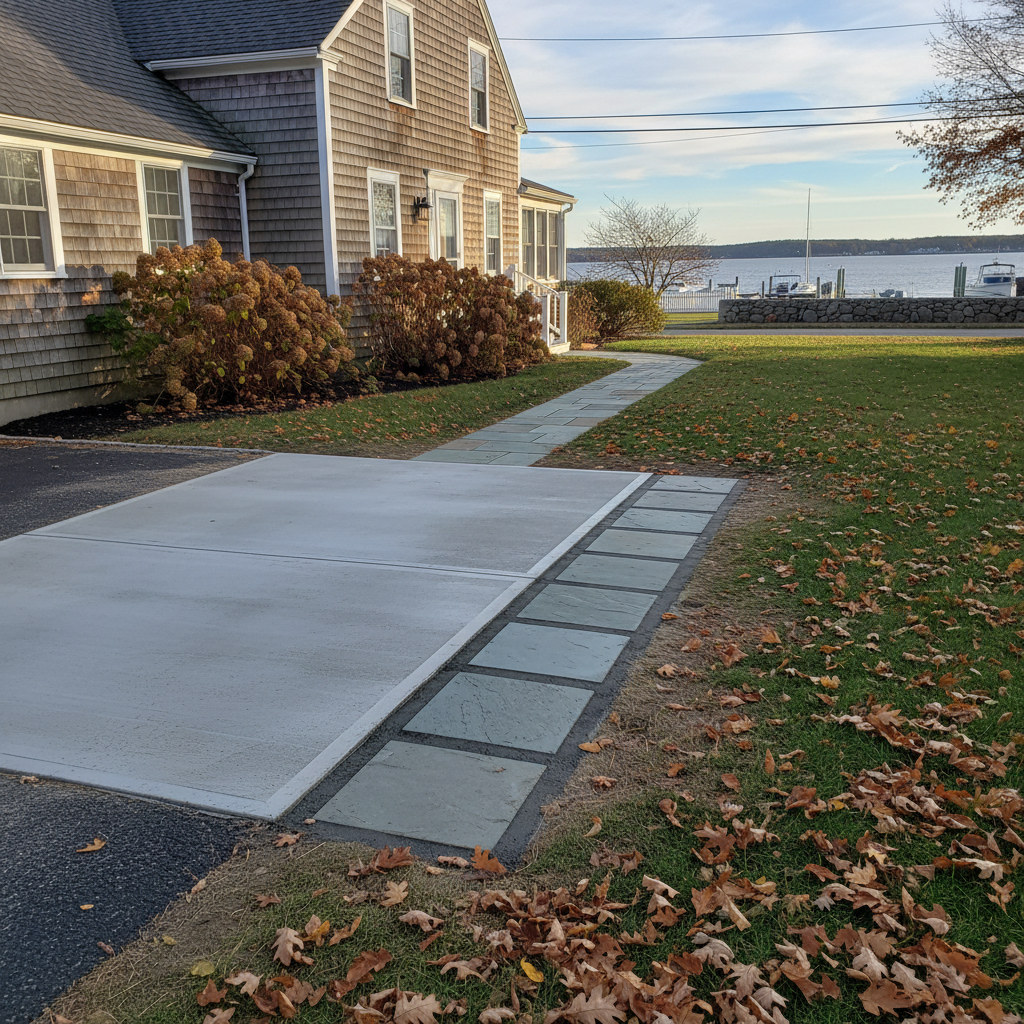
You've got concrete around your home, right? Driveways, walkways, patios – they're built to last, sure, but they're not indestructible. Especially not with the kind of weather we get here in Bristol. I've seen firsthand how our coastal climate, with its freeze-thaw cycles and salty air, can really beat up concrete if you're not paying attention. So, let's talk timing: when's the best time to tackle those concrete repairs? What weather conditions are a definite no-go? And how can you keep your concrete looking good all year?
Timing Your Concrete Repairs: It's All About the Temperature
This is probably the biggest question I get. "When can you fix my cracked patio?" The short answer is: it really depends on the temperature. Concrete needs specific conditions to cure properly, meaning it can't be too hot, and definitely not too cold.
Spring and fall are generally your best bets for major concrete work here in Bristol. Think late April through June, then September through October. During these months, daytime temperatures usually stay consistently above 40-50 degrees Fahrenheit, and nighttime lows aren't dipping much below freezing. That's ideal. When the temperature is too low, the water in the concrete mix can freeze before it cures. That totally messes up the strength and durability. You'd end up with weak, spalling concrete, and nobody wants that, do they?
Summer can work, but you've got to be careful. If it's consistently in the high 80s or 90s, especially with direct sun, the concrete can dry out too fast. That leads to shrinkage cracks and a weaker surface. We can work around it by scheduling pours early in the morning, using curing compounds, and keeping the concrete damp, but it adds another layer of complexity. If you're looking at a big project, spring or fall is just less hassle and generally yields better results.
Winter? Forget about it for most repairs. Unless it's an emergency patch job on a very mild day, you won't see me pouring new concrete when it's regularly below freezing. It's just not worth risking the integrity of the finished product. We're talking about a permanent fix, not a temporary band-aid.
Weather Conditions That Affect the Job
Beyond just temperature, a few other weather factors play a big role in concrete repair and installation.
- Rain: You simply can't pour concrete in the rain. Period. It messes with the water-cement ratio, washes away the surface, and just makes a huge mess. We're always watching the forecast closely. A little drizzle after it's cured for a day or two is usually fine, but not during the pour or initial set.
- Wind: High winds can dry out the surface of fresh concrete too quickly, especially on hot days. This can cause plastic shrinkage cracks. We might use windbreaks or apply curing compounds sooner if it's a windy day.
- Humidity: Very low humidity can also contribute to rapid drying. High humidity, on the other hand, can slow down the curing process. That's not necessarily bad, but it means you need to be patient before putting weight on it.
These are all things we, as professionals, account for. But it's good for you to know why we might reschedule or suggest a different day.
Protecting Your Concrete Investment Year-Round
So, you've got your concrete repaired or installed. Now what? Protecting it from Bristol's elements is key to making it last. Here are a few things you can do:
- Seal It: This is probably the most important thing you can do. A good quality concrete sealer acts like a shield. It repels water, which is crucial for preventing those damaging freeze-thaw cycles. Water seeps into the pores of unsealed concrete, freezes, expands, then thaws, creating cracks and spalling over time. Sealing also protects against stains from oil, rust, and de-icing salts. I recommend sealing every 2-5 years, depending on the sealer type and how much traffic it gets.
- Mind Your De-Icers: Be super careful with de-icing salts in the winter. Many common de-icers, especially those containing ammonium sulfate or ammonium nitrate, are highly corrosive to concrete. They can cause surface damage, scaling, and spalling. Stick to products labeled "concrete-safe" or just use sand for traction. Calcium chloride is generally a better option than rock salt (sodium chloride), but even that should be used sparingly.
- Clean Regularly: Sweep off dirt, leaves, and debris. Pressure wash periodically to remove grime, but don't use too high a pressure setting, or you could damage the surface, especially if it's an older or unsealed slab.
- Address Drainage: Make sure water drains away from your concrete surfaces and your home's foundation. Ponding water is a concrete killer. This is especially true for homes in areas like Poppasquash, where some properties have lower elevations and can see more standing water after heavy rains. If you've got standing water, that's a sign you might need to address grading or drainage around your concrete.
- Watch for Cracks: Small cracks can become big problems if left unchecked. If you see new cracks forming, especially if they're widening, give us a call at Guardian Concrete & Masonry. Catching them early can save you from a much bigger, more expensive repair down the road.
Taking care of your concrete isn't just about fixing problems; it's about prevention. A little proactive maintenance goes a long way in extending the life of your driveways, patios, and walkways, keeping them safe and looking good for years to come.