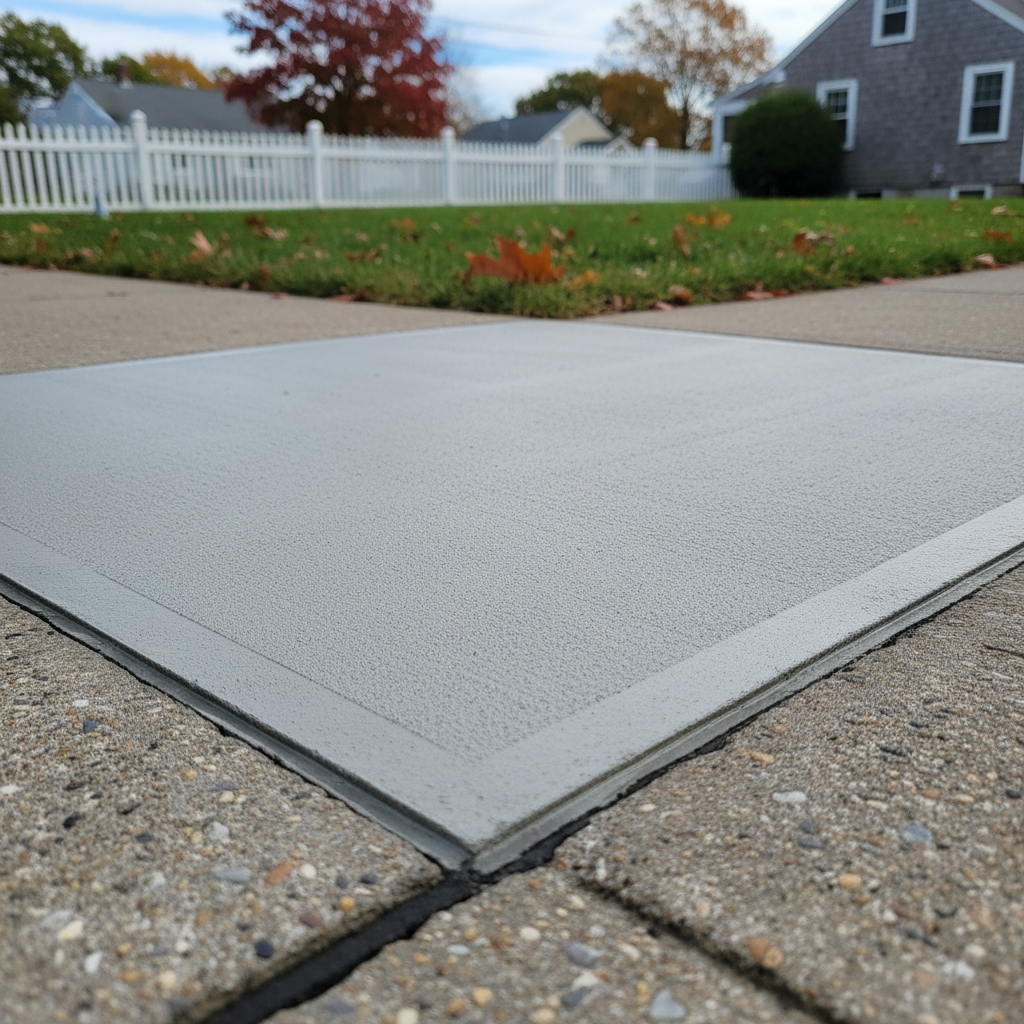
Alright, let's talk about concrete cracks. You've got 'em, I've seen 'em. From your patio to your driveway, it's pretty much a fact of life, especially with our freeze-thaw cycles here in Bristol. But before you panic or grab every tube of caulk at the hardware store, let's figure out what you're dealing with and what your best move is.
Before You Start: Assess the Damage
First things first, take a good look at that crack. Not all cracks are created equal. Are we talking about a hairline fracture, barely wider than a credit card? Or is it a gaping canyon where you could lose a small child's toy? Is the concrete still level on both sides of the crack, or has one side sunk or lifted significantly?
- Hairline Cracks (less than 1/8 inch wide): These are often cosmetic. They happen when concrete shrinks as it cures, or from minor stress. You can probably tackle these yourself.
- Medium Cracks (1/8 to 1/2 inch wide): These can be a bit more serious. They might indicate a little more movement or stress. Sometimes DIY, sometimes call a pro.
- Wide Cracks (over 1/2 inch wide), Uneven Slabs, or Multiple Cracks: If one side of your driveway slab is a good inch lower than the other, or you've got a spiderweb of cracks across a large area, that's usually a sign of a bigger problem. Think settling soil, water erosion underneath, or a poor sub-base. This is almost always a job for a professional.
- Spalling or Pitting: This is when the surface of the concrete starts to flake or chip away. It's often due to freeze-thaw damage (hello, Rhode Island winters!) or improper finishing. Small areas might be DIY, but widespread spalling needs a pro.
Think about where the crack is, too. A crack in a decorative garden path is one thing; a crack running through your foundation wall is a whole different ballgame. If it's anything structural, don't mess around. Call someone who knows what they're doing.
DIY Concrete Repair: When You Can Do It Yourself
For those smaller, non-structural cracks, you absolutely can handle it. Here's the basic rundown of what you'll need and how to do it:
What You'll Need:
- Wire brush or stiff broom
- Chisel and hammer (if needed to widen the crack slightly for filler)
- Shop vacuum or leaf blower
- Concrete crack filler/sealant (make sure it's appropriate for outdoor use and flexible)
- Caulking gun (if using a tube product)
- Trowel or putty knife
- Safety glasses and gloves
The Process:
- Clean it out: This is critical. Use your wire brush to get rid of any loose debris, dirt, or old crumbling concrete inside the crack. If the crack is too narrow for the filler to get a good bond, you might need to carefully widen it a bit with a chisel and hammer, creating an inverted V-shape.
- Vacuum it up: Get every last speck of dust out. A shop vac works wonders. You want a clean, dry surface for your filler to adhere to.
- Apply the filler: Follow the manufacturer's instructions on your chosen crack filler. Some are pourable, some come in tubes for a caulking gun. Don't overfill; you want it flush or slightly below the surface, not mounded up.
- Smooth it out: Use a trowel or putty knife to smooth the filler, making it as flush as possible with the surrounding concrete.
- Cure time: Let it cure! Don't walk or drive on it until the product says it's ready. This could be a few hours or a few days.
This kind of repair is great for preventing water from getting into those small cracks, freezing, and making them bigger. It's preventative maintenance, really.
When to Call a Pro (Like Guardian Concrete & Masonry)
Look, I'm all for saving a buck and doing things yourself, but some jobs are just too big or too complex for the average homeowner. Here's when you should absolutely pick up the phone:
- Wide, Deep, or Uneven Cracks: As I mentioned, if slabs are shifting, or the crack is wider than half an inch, you've got underlying issues. Just filling it won't solve the root problem, and you'll be doing it again next year.
- Structural Concerns: If the crack is in a foundation, a retaining wall, or anything that's holding up your house, don't even think about DIY. This requires specialized knowledge and equipment to assess and repair correctly.
- Extensive Spalling or Pitting: If a large area of your concrete surface is crumbling, it might need resurfacing or even replacement. A professional can evaluate whether a simple overlay will work or if you need to tear it out.
- Drainage Issues: Often, concrete problems stem from poor drainage. Water getting under a slab, especially in areas like the Bristol Highlands where we have some clay soils, can cause significant settlement. A pro can identify and fix these drainage issues as part of the repair.
- Time and Tools: Let's be honest, you might not have the heavy-duty tools or the time to rent them and learn how to use them. For bigger jobs, it's often more cost-effective and less stressful to let someone with the right gear and experience handle it.
A good contractor won't just fill a crack; they'll try to figure out why it cracked in the first place. That's the difference between a temporary fix and a lasting solution.
After the Repair: Keep an Eye On It
Whether you did it yourself or hired us, don't just forget about it. Check on your concrete periodically. Look for new cracks, or if the old ones are reappearing. Keep your gutters clean and make sure downspouts are directing water away from your foundation and slabs. Proper drainage is your best friend when it comes to concrete longevity.
Taking care of your concrete isn't just about curb appeal; it's about protecting your investment. If you're ever unsure, just give us a call at Guardian Concrete & Masonry. We're happy to take a look and give you an honest opinion on whether it's a DIY job or something that needs a little more muscle.